Storing Reservoir Natural Gas Solutions
Geology, location, project objectives, deliverability requirements, and long-term economics all influence the optimal storage solution.
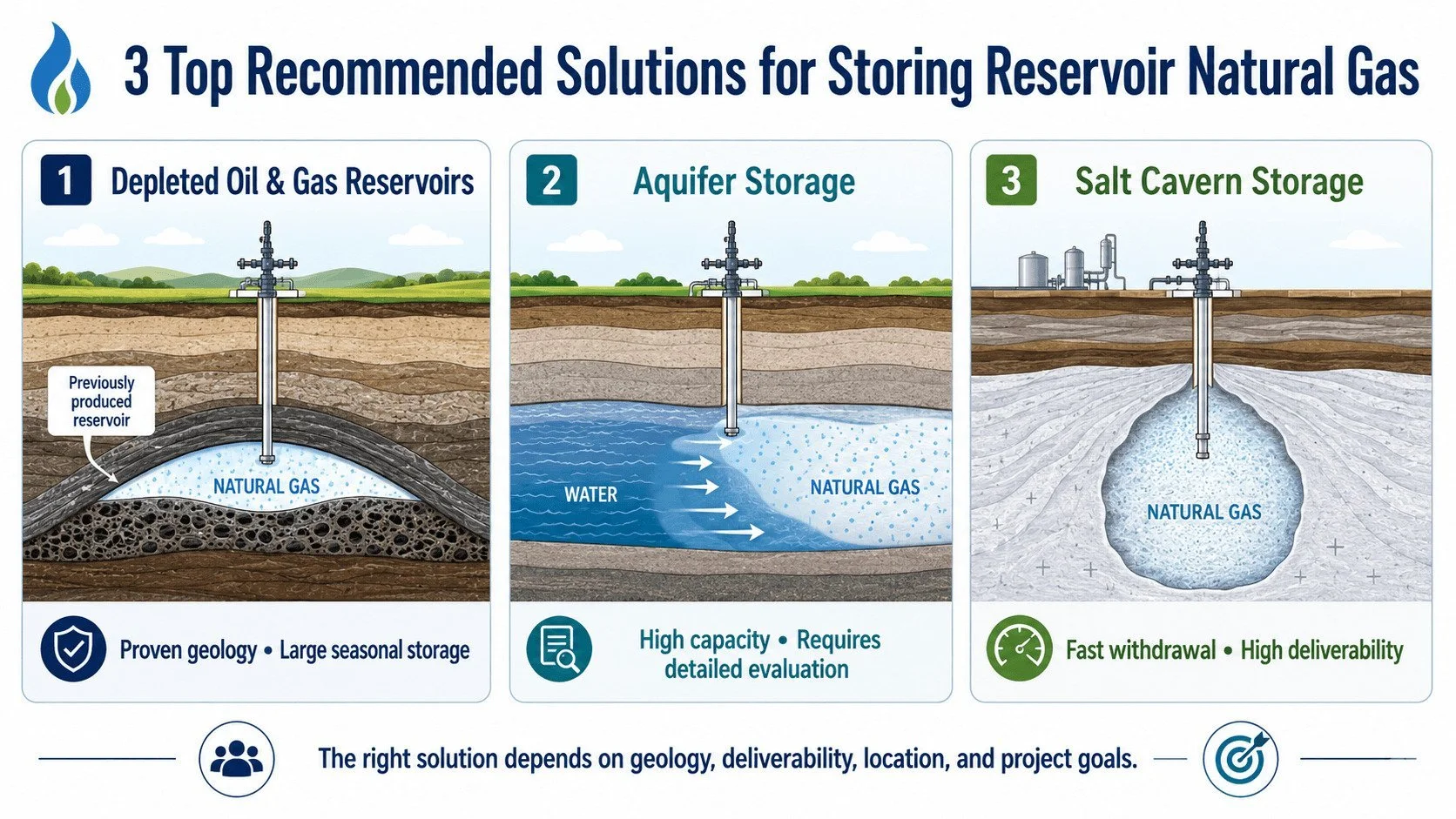
Depleted Oil and Gas Reservoirs have already demonstrated their ability to store hydrocarbons underground, so they are often the first choice. These formations are often known geologically, with existing well data and sometimes existing infrastructure that can help reduce both development time and costs. These are particularly useful for large-volume, seasonal storage, where gas is injected in times of lower demand and withdrawn when demand rises.
Natural gas can also be stored in deep Underground Aquifers, where porous rock is filled with water. Properly engineered and evaluated, the injected gas displaces the water and creates an underground storage area. Aquifer storage can provide significant capacity but generally requires more detailed geologic study, testing, and monitoring because the formation may not have previously contained hydrocarbons.
Salt Caverns are large, secure voids created by solution mining of underground salt formations to store natural gas under pressure. They are highly valued for their speed of injection and withdrawal, making them ideal for short-cycle storage, peaking support and market flexibility. The total capacity of salt caverns may be less than that of large depleted reservoirs, but deliverability from salt caverns is generally better.
Lonquist provides the expertise to review the geologic, reservoir, drilling, regulatory, and operational evaluation required to ensure your storage project is safe, efficient, and commercially viable.